
The Power of Sensate Focus: Rebuild Trust & Rekindle Intimacy

In today’s fast-paced, high-pressure world, relationships often bear the quiet weight of unmet expectations, unresolved emotional distance, or past trauma. When physical connection begins to feel like a performance test or a source of stress rather than a warm sanctuary, couples can easily feel disconnected.
That is exactly where sensate focus offers a fresh start.
Originally developed by sex researchers Masters and Johnson in the 1960s, sensate focus is a mindful, touch-based exercise designed to strip away performance pressure, rebuild trust, and help partners reconnect at their own comfortable pace.
Instead of treating physical touch as a stepping stone toward sex or climax, sensate focus invites you to slow down, drop the pressure, and tune in to simple, raw physical sensations.
What Is Sensate Focus, Really?
At its heart, sensate focus is simple: partners take turns touching each other with zero pressure to perform, become aroused, or reach orgasm.
The goal isn’t a sexual outcome—the goal is presence. You focus purely on the physical feelings: noticing the texture of skin, the warmth of a hand, the rhythm of breathing, or gentle shifts in pressure.
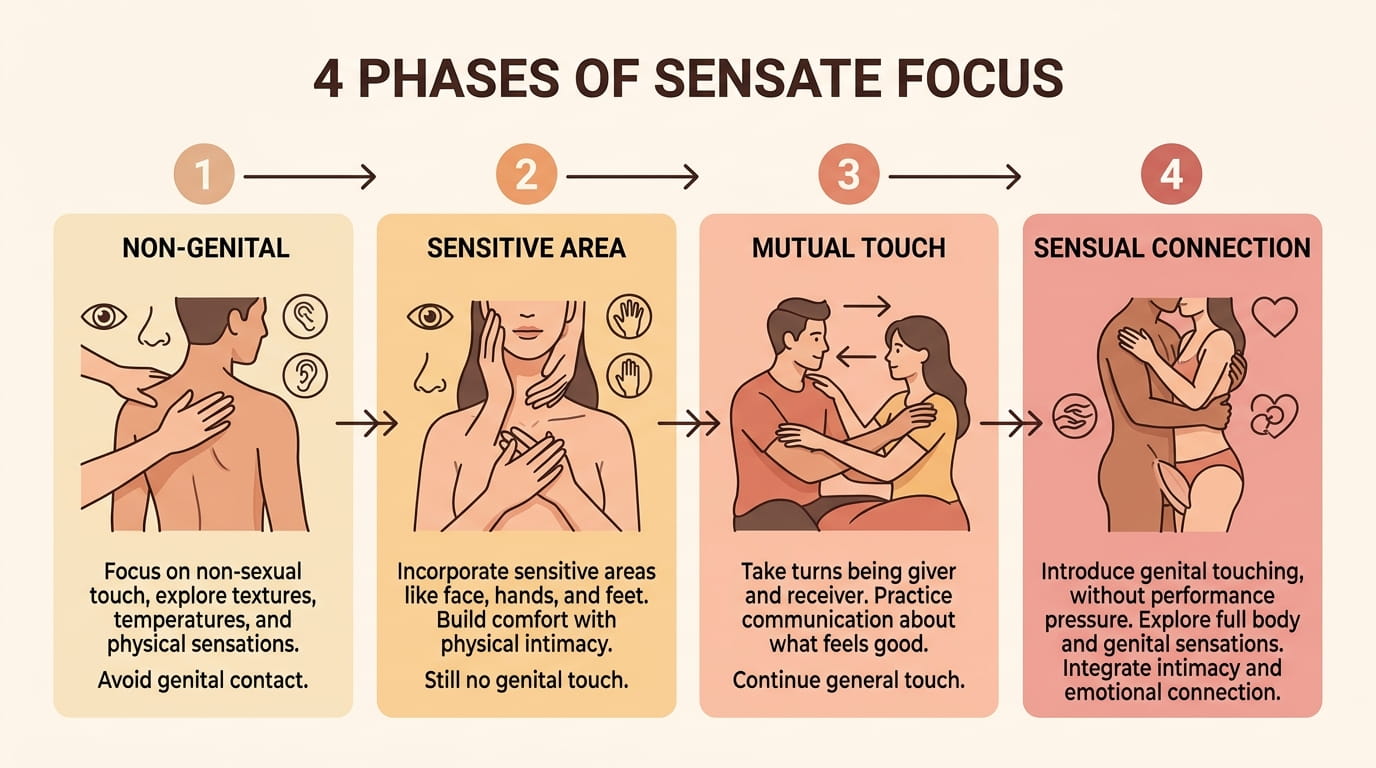
Sensate focus generally moves through four thoughtful stages:
-
Phase 1: Non-Genital Touch
Partners explore neutral areas like the back, shoulders, arms, or feet. Breasts, genitals, and kissing are strictly off-limits to remove any hidden expectations.
-
Phase 2: Gradual Inclusion
Sensitive areas (breasts and genitals) are slowly included in touch routines, but still with a clear boundary: no climax and no goal-oriented sexual activity.
-
Phase 3: Mutual & Synchronized Touch
Both partners touch each other simultaneously, often using natural lubricants to explore shared sensory awareness together.
-
Phase 4: Sensual Connection (Optional)
If both partners feel completely relaxed and ready, touch naturally transitions into deeper physical intimacy—always guided by mutual comfort.
Why Structured Touch Works for Trust and Healing
1. Safety Through Predictable Boundaries
When intimacy feels overwhelming—especially after emotional or physical trauma—predictability brings safety. Sensate focus sets clear, agreed-upon ground rules before you even begin. Knowing exactly what will and won’t happen allows your nervous system to fully relax.
2. Dissolving Performance Anxiety
When you take orgasm and sexual “success” off the table, fear of inadequacy completely disappears. You stop worrying about how your body looks or whether you are performing “correctly,” allowing you to actually be present in the moment.
3. The Freedom of “Non-Demand” Touch
In many long-term relationships, a simple touch on the waist or shoulder can carry an implicit expectation of sex. Sensate focus breaks this pressure by reclaiming touch for the sake of touch, building genuine tenderness and affection without hidden motives.
4. Reclaiming Body Ownership After Trauma
For trauma survivors, unexpected or demanding touch can trigger distress. Because sensate focus empowers you to set strict boundaries and pause at any second, it offers a safe environment to rebuild bodily trust and pace your own healing journey.
Real-Life Perspectives: What Works and What Doesn’t
People who have practiced sensate focus often share two key takeaways:
-
Patience Brings Results: Couples who commit to staying in early phases without rushing report feeling significantly closer, more relaxed, and noticeably less anxious within a few weeks.
-
Respect Is Non-Negotiable: Sensate focus is not a magic fix for fundamentally broken relationship dynamics. It requires active consent, mutual respect, and both partners being genuinely open to the process.

A Practical Step-by-Step Guide for Couples
If you want to try sensate focus at home, here is a simple roadmap to get started:
-
Set the Scene: Pick a quiet, private room where you won’t be interrupted. Dim the lighting, keep the room warm, play soft music if you like, and put phones completely away.
-
Take Turns: Dedicate 15 to 20 minutes for one partner to touch, then switch. Start strictly with non-genital areas like arms, back, or feet.
-
No Pressure Allowed: No kissing, no talking (except to express physical discomfort), and no expectation of climax. If arousal happens naturally, acknowledge it quietly without changing the goal of the session.
-
Share Afterwards: Spend a few minutes after the session sharing gentle, positive feedback—like “I really liked the warm pressure on my shoulders”—without critique or performance analysis.
-
Move at Your Own Pace: Stay in the initial phase as long as needed—whether days or weeks—until both of you feel 100% calm and relaxed.
Final Thoughts
Sensate focus isn’t just an exercise—it’s a quiet invitation to slow down, listen to your bodies, and rediscover trust without performance pressure.
At Deeper Intimacy Connection, we advocate for practical, adult educational perspectives that help partners cultivate self-awareness, heal emotional distance, and build meaningful relationships.
Remember, healing and intimacy don’t happen overnight. But with consent, presence, and patience, you can guide each other back to safety, connection, and warmth—one gentle touch at a time.